


Rugiet: Men's health
4.836.00 Reviews
App Specs
- Version
- 1.18.0
- Updated On
- License
- Free
- Downloads
- 10,000+
- Developer
- Rugiet
- Categories
- Medical
- Platform
- Android
Screenshots

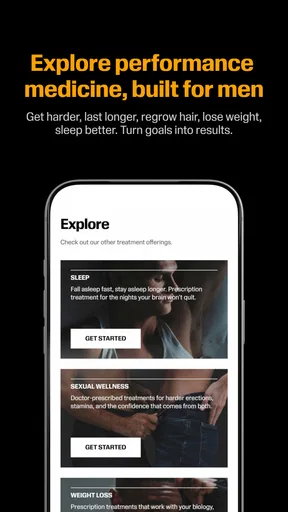
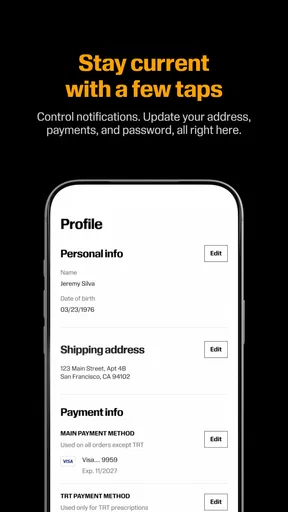
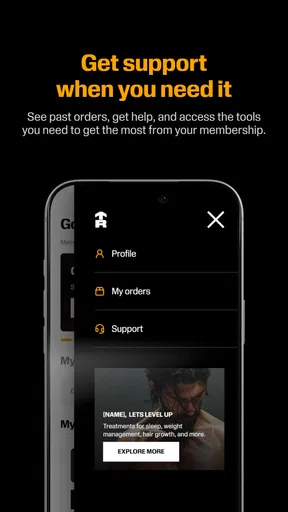
 Analysis by AppCompare
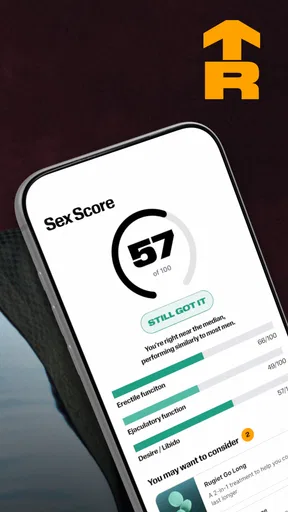
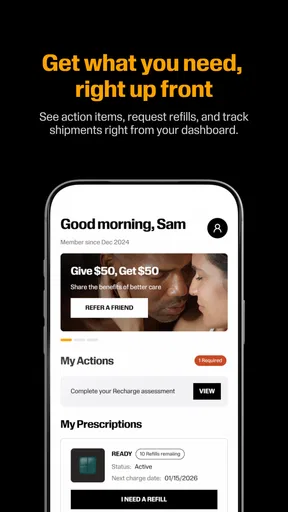
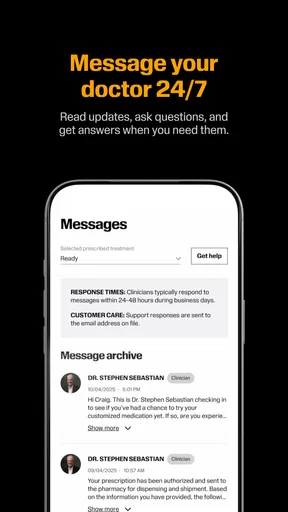
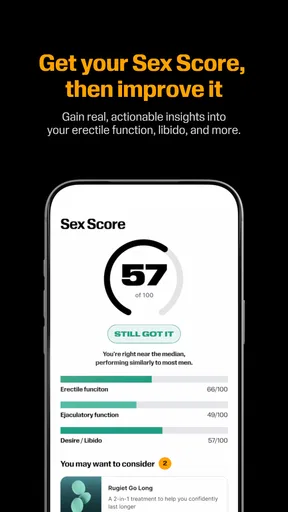
I approached Rugiet as a medical app for handling men’s health care from a phone rather than as a general wellness tracker. Its purpose is practical: it brings prescription management, communication with a doctor, and treatment exploration into one place. That focus makes it most useful when you want a more direct route between a health question and the next step in care, without treating your phone as a replacement for professional advice.
My first impression was that the app makes sense for people who prefer managing routine healthcare digitally. The experience is centered on an ongoing relationship with treatment, so it is less about browsing health articles for curiosity and more about keeping medical tasks organized. That distinction matters. If you want a broad fitness dashboard, symptom diary, or general-purpose medication organizer, this is not trying to be any of those things.
Rugiet is developed by Rugiet and sits in the medical category. It is free to download, carries a Mature 17+ age rating, and has reached over ten thousand installs. Its average rating is 4.9 from around eight hundred ratings, which suggests a strong response from the people who have chosen this particular kind of service. I would still treat that rating as a useful signal rather than proof that every patient will have the same experience, because medical needs and expectations vary considerably.
How connected care shapes the everyday experience
I see connected care as the part of Rugiet that can turn a private health question into a manageable next step, but it also means the app is only one link in a wider process. I would use it to organize what I need to ask and keep routine communication together, while staying clear about when a direct call or urgent care is the better handoff. That distinction helps set realistic expectations for the everyday workflow.
Where the network becomes part of the workflow
The most important thing to understand is that Rugiet is built around connected healthcare moments. Prescription-related actions and doctor messaging naturally depend on communication between your phone and the service behind the app. In practice, that means the app is most valuable when you have a stable connection and enough time to complete a task properly, rather than when you are rushing through a poor-signal situation.
I found it helpful to think of the app as a front door to a care process. Opening the app is only one part of the experience; the meaningful steps involve sending information, receiving guidance, reviewing treatment-related details, or checking what needs attention next. A weak connection can turn a simple action into an uncertain one, especially if you are not sure whether a message or request went through.
That is a different rhythm from a standalone reference app. A medical encyclopedia can often answer a basic question immediately, while a connected prescription service is valuable because it links information with an action involving your care. The trade-off is that its usefulness is tied more closely to account access, communication, and service availability.
Worth Reading Before You Choose

Flipboard Shows What News Apps Must Do Beyond the Feed

Switching to Android Auto Means Rethinking Your Driving Routine

Google Calendar Makes a Crowded Week Easier to Manage

Ludo King Makes the Most of the Minutes Between Plans

Baby Panda World Brings Quick Play to Modern Phones, but Its Game Library Feels Busy

ESPN’s Live Game View Makes Following Close Games Easier
For that reason, I would not rely on it as the only place where I keep urgent medical information. If you are traveling, entering an area with unreliable reception, or preparing for an appointment, it is sensible to keep any essential instructions and contact details available through the channels your clinician has already recommended. A connected medical app should support your care routine, not become a single point of failure for urgent decisions.
A realistic mobile routine
Imagine checking the app during a lunch break because you want to review a prescription-related question before the evening. On a reliable connection, the phone format is convenient: you can open the service, find the relevant area, and continue the conversation without waiting to use a desktop computer. That small reduction in friction is where the app earns its place.
The same situation becomes less comfortable if you are in a basement, on public transport, or moving between networks. I would avoid starting an important request while distracted or when the connection is unstable. Instead, I would wait until I could confirm that the relevant screen loaded fully and that any message or action showed a clear completion state. This is not a criticism unique to Rugiet; it is a basic caution for any app that handles healthcare communication.
The phone-first approach is particularly suitable for people who already use their smartphone as the main way to manage appointments, messages, and reminders. It may feel less natural to someone who prefers calling a clinic or discussing every question face to face. The app does not remove the need for judgment; it simply gives a digital route for parts of the process that many users would rather handle privately and at their own pace.
Privacy-minded habits without overcomplicating things
Because this is a medical app, I would use it in a more deliberate way than a casual shopping or entertainment app. I would avoid opening sensitive screens on a shared device, and I would check the recipient and wording before sending a doctor message. A short, specific message is usually more useful than a vague note: describe what you are asking, mention the relevant treatment context, and separate an immediate concern from a general question.
It is also worth remembering that connectivity has a data side as well as a signal side. If you are using mobile data, you may prefer to handle longer reading or treatment exploration on a trusted Wi-Fi connection. That is not because the app is necessarily heavy; it is simply a sensible habit when a medical service includes account activity and communication. I would also avoid using an open public network for sensitive tasks when a more trusted connection is available.
These habits make the experience calmer. Rather than tapping repeatedly when a screen seems slow, I would first check whether the connection is stable, wait for a visible response, and then try again only if necessary. Repeated taps are especially unhelpful around requests or messages because they can create uncertainty about whether an action happened once or more than once.
What happens when something goes wrong
Every connected app has failure points, and a medical service deserves a clear recovery routine. If a page does not load, I would first pause rather than assume the prescription or message has changed. I would check the connection, reopen the relevant area, and look for a current status before repeating an action. If the problem continues, contacting the appropriate healthcare support channel is safer than guessing.
The key limitation is psychological as much as technical: uncertainty feels more serious when the subject is treatment. A delayed social feed is annoying; an unclear prescription request can affect your confidence about what to do next. That is why I value visible confirmation and careful checking, even though no app can eliminate every network or service interruption.
Rugiet is a better fit for routine, non-emergency management than for urgent symptoms. If you have a serious or rapidly worsening medical concern, waiting for an in-app exchange would be the wrong approach. Use emergency services or the urgent-care route appropriate to your situation. The app can help with an established care process, but it should not be treated as an emergency response tool.
Another practical point is device continuity. If you change phones, lose access to your usual connection, or sign out unexpectedly, you may need to spend time restoring access before you can continue. I would make sure I know how to reach the relevant clinical or support contact outside the app as well. That simple backup prevents a login or connectivity problem from becoming a care-management problem.
Prescription management is where the app has the clearest value
The strongest use case is keeping prescription-related tasks together with the ability to communicate with a doctor. Instead of separating treatment exploration from the conversation that gives it context, the app is designed around bringing those steps closer. For someone who wants a focused men’s health service rather than a large, cluttered healthcare portal, that concentration can be reassuring.
I would use it to prepare better questions, not to self-diagnose. Before messaging, I would note what I want clarified and avoid changing a treatment plan based solely on something I read in an app. The advantage of a connected medical workflow is that questions can be directed toward professional guidance; the disadvantage is that the user still has to recognize when a question needs a faster or more direct answer.
There is also a useful distinction between exploring treatments and choosing one. Exploration can help you understand what topics to raise with a doctor, but it should not encourage a shopping mindset around medication. The right option depends on personal health circumstances, other medicines, and clinical judgment. I appreciate the app more when it is used as a bridge to that conversation rather than as a substitute for it.
Who will appreciate it, and who should look elsewhere
I would recommend Rugiet to an adult who wants a dedicated digital route for men’s health prescriptions and doctor communication, especially if using a phone feels easier than managing care through scattered calls, emails, and browser pages. It is also appealing for someone who values discretion and prefers composing a question in a private, considered way rather than trying to explain everything during a short phone call.
I would be more cautious about recommending it to someone who dislikes connected services, has very limited internet access, or expects a complete medical record and broad healthcare management system. It is not the obvious choice for tracking exercise, nutrition, blood pressure, or general symptoms across many conditions. A primary-care portal may be better when you need appointments, test results, referrals, and a wider clinical history in one place.
It is also not the right choice for anyone looking for instant answers without clinician involvement. Men’s health questions can be sensitive and sometimes complicated. If you want a quick anonymous article and no account-based process, a general educational resource may feel easier, although it will not provide the same prescription and doctor-communication path.
How it compares with familiar alternatives
Compared with calling a clinic, the app offers a quieter and more structured way to raise a question. Calling can be better when the issue is urgent, complicated, or easier to explain aloud. The app is more attractive when the matter is routine and you want to review your wording before sending it.
Compared with a general pharmacy application, Rugiet appears more focused on the relationship between treatment exploration, prescriptions, and medical communication. A pharmacy app may be stronger for broad refill logistics, store services, or managing medicines from multiple providers. I would choose based on the task rather than expecting one app to replace the other.
Compared with a hospital or insurer portal, its narrower focus can be a benefit. Large portals often contain many sections that are irrelevant to a specific men’s health concern. On the other hand, those broader systems may be better for a complete view of your healthcare. Rugiet makes the most sense as a focused companion, not necessarily as the universal home for every medical record.
Small workflow choices that improve the experience
My first tip is to write down the purpose of a message before opening the app. Decide whether you are asking about a prescription, seeking clarification, or exploring a treatment topic. That prevents a conversation from becoming a collection of disconnected questions and makes it easier to recognize what still needs an answer.
My second tip is to use a reliable connection for anything that requires confirmation. If a screen is loading slowly, do not assume that pressing the same control repeatedly will make it faster. Wait, verify the result, and keep a note of what you intended to do. This is a simple but important safeguard in any prescription workflow.
My third tip is to separate routine planning from urgent care. Use the app when you have time to read carefully and communicate clearly. If a symptom is severe, sudden, or alarming, move immediately to the appropriate medical service instead of waiting for an in-app response. That boundary is more important than any convenience the app offers.
My fourth tip is to treat treatment exploration as preparation for a conversation. I would save the questions that matter to me, then ask the doctor what applies to my situation. This approach avoids the common mistake of interpreting general treatment information as a personal recommendation.
Version, maturity, and overall confidence
The current release is version 1.18.0, and the app requires Android 7.0 or later. That makes the technical entry point fairly accessible for people using older Android devices, although the quality of the experience will still depend on the phone, connection, and account workflow. Before relying on it during travel or an important treatment task, I would open it at home and make sure I can reach the areas I expect to use.
The Mature 17+ rating is appropriate for a medical service dealing with adult men’s health. It also sets the right expectation for families: this is not a general health app intended for children. Adults should still handle the information thoughtfully, particularly when discussing medication or symptoms.
The service was released on April 13, 2026, so I would judge it as a relatively recent option rather than a long-established all-purpose healthcare platform. Its early reception is encouraging, with a 4.9 average and more than eight hundred ratings, but the smaller review volume means I would still form my own opinion after using it for my particular care needs.
My connectivity verdict
Rugiet works best when I treat it as a focused, connected medical workspace: open it with a dependable connection, use it for prescription-related organization and doctor communication, and keep an independent route for urgent help. Its value comes from reducing the distance between a men’s health question and a professional care conversation, not from trying to become every healthcare tool at once.
I like the focused purpose, the free entry point, and the way a phone can make sensitive routine tasks feel more manageable. I am less enthusiastic about depending on any connected service when the network is unreliable or when the situation needs immediate attention. That is the main trade-off to understand before installing it.
For the right user, this is a practical medical app rather than a novelty. If you want a dedicated way to explore treatments, manage prescriptions, and message your doctor from a mobile device, it deserves consideration. If you need comprehensive records, emergency guidance, or offline certainty, a broader healthcare channel or direct clinical contact will be the better choice. My recommendation is positive, provided you use Rugiet as part of a wider care plan and keep connectivity limits in mind.
Pros
- Discreet ordering and delivery can make sensitive purchases more comfortable.
- Combines multiple active ingredients in one dissolvable medication.
- Sublingual use may avoid swallowing traditional tablets.
- Personalized care may be available through an online medical consultation.
- Useful for men seeking an alternative to standard ED prescriptions.
Cons
- Requires medical approval
- so treatment is not guaranteed after consultation.
- May cause headache
- flushing
- nasal congestion
- or dizziness.
- Not suitable for users taking nitrates or certain interacting medicines.
- The dissolvable format may have an unpleasant taste for some users.
- Pricing
- insurance coverage
- and refill terms may vary by location.
FAQs for Rugiet: Men's health
What is Rugiet: Men’s Health, and what services does it provide?
Rugiet: Men’s Health is a men’s wellness and sexual-health platform designed to connect users with licensed medical professionals through an online consultation process. Depending on eligibility and medical approval, users may be able to discuss concerns such as erectile dysfunction and receive treatment delivered through the service. The app is not a substitute for emergency care or an in-person doctor when a physical examination is necessary.
Do I need a prescription to receive treatment through Rugiet?
Yes, prescription treatments generally require a medical evaluation and approval from a licensed healthcare professional. After creating an account, you may need to complete a health questionnaire and provide information about your medical history, current medications, and symptoms. A clinician reviews the information before deciding whether treatment is appropriate. Approval is not guaranteed, and some users may be directed to seek in-person medical care.
Is Rugiet safe for everyone to use?
Rugiet may not be suitable for everyone, particularly people taking nitrate medications, certain blood-pressure medicines, or drugs that can interact with erectile-dysfunction treatments. Users with heart conditions, uncontrolled hypertension, severe liver or kidney problems, or other significant health concerns should disclose them during the consultation. Always provide accurate medical information and follow the clinician’s instructions rather than self-treating.
How does the consultation and delivery process work?
The usual process involves downloading the app or visiting the service, creating an account, completing a medical questionnaire, and submitting the information for review. If a clinician approves treatment, the prescription may be fulfilled through an associated pharmacy and shipped to the address provided, depending on availability and location. Processing and delivery times can vary, so users should review current terms, shipping details, and refill policies before ordering.
What side effects or warning signs should users know about?
Possible side effects depend on the specific treatment prescribed, but may include headache, flushing, nasal congestion, indigestion, dizziness, or changes in vision. Users should follow the prescribed dosage and avoid combining treatments without medical advice. Seek urgent medical attention for chest pain, severe allergic symptoms, sudden vision or hearing loss, or an erection lasting longer than four hours. Contact the prescribing clinician if symptoms are persistent or concerning.


